

 Dec 05, 2025
 3 min read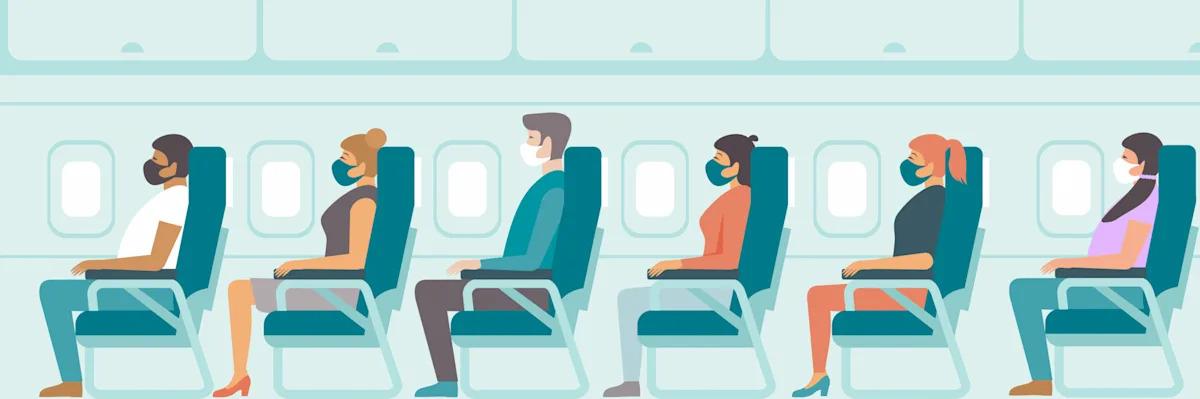
These crowded places may not be the airborne germ cesspools we fear.
The air in hospitals and airplanes is cleaner than you think
We humans tend to move into small spaces for a variety of reasons.Sometimes we pack a lot of people on planes going to Boca.Other times, we have been forced to sit in close proximity while sitting in a hospital waiting room.
Especially in a time of global respiratory disease pandemic, being in such crowded spaces can be a source of anxiety.But is the air in airplanes and hospitals circulating with airborne pathogens or other toxic diseases, as our imaginations sometimes lead us to believe?
According to researchers examining the quality of these two common proxies for the sardine cart, it's not that bad.
The new findings, published in Microbiome, revealed the presence of diverse, and mostly benign, microbial communities that were very similar between hospitals and airplanes.Some pathogenic microbes, such as Escherichia coli, were at low densities and did not indicate active infection.However, 23 types of antibiotic-resistant genes appeared in both samples, which were associated with major classes of antibiotics such as gentamicin and streptomycin, There was serious evidence of an increase in antibiotic-resistant bacterial infections.
The 407 isolated microbes discovered by a team of researchers led by Northwestern University scientists mostly came from people's skin.These include the harmless bacteria, Staphylococcus epidermidis and Cutibacterium acnes.Although the thought that we are constantly breathing in other people's skin germs is a bit worrisome, it is also to be expected.
Read more: “Why Germs Love Our Collective Amnesia”
"Indoor air looks like indoor air, which also looks like human skin and the author Erica Hartmann in a statement. As her colleagues and colleagues from the Harvard T.h. School of Public Health mentioned in the paper, human microorganisms follow their skin normally, and it becomes air as we drink water in millions of units.
While airplanes and airspace and hospitals Teeming with harmless skin bacteria can be comforting or alarming, the method used by the research team to generate these resources.The scientists collected data from the factors emitted by air travelers and health professionals to learn more about air quality at the study sites.
"We found that we could use face masks as a cheap and easy way to sample air for both personal exposure and public exposure," Hartman said.
The COVID-19 pandemic has led to a wave of research into airborne microbes.However, they are difficult to sample because air is a medium that is constantly moving and contains small, low-mass microbes such as viruses, bacteria and fungi.It's like trying to test moving needles in a haystack.Instead of directly assessing the airborne microbial community, researchers extracted microbes from face masks that people wore on airplanes or hospitals to measure the microbial load in these environments.
Using a "scrotum metagenomics" approach, Hartmann and colleagues collected DNA from the outside of 22 disposable face masks.Passengers wore masks on domestic and international flights, while hospital workers wore masks during their shifts and then sent them to Harman's lab in sterile bags.Unworn face masks served as the study control.
In addition to better behavior in a place where people gather face to face can learn about closed air spaces.
Do you like Nautilus?Subscribe to our free newsletter.
Main image: Zubada / startingtock
This story was originally filmed on the Nautilus.